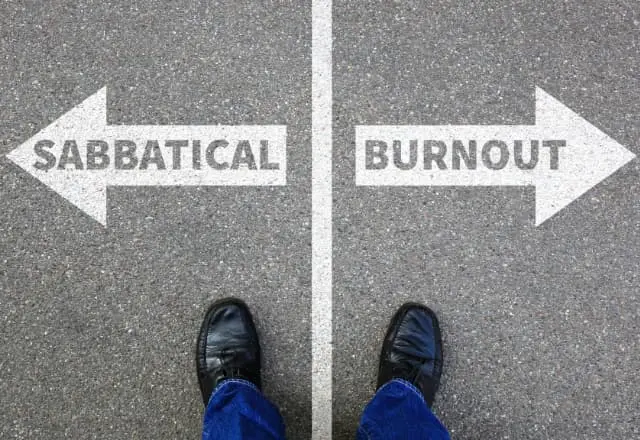
Are you feeling burned out? Do you really need a long vacation and your main task of the day is simply shopping at the local grocery store? People take long vacations for many reasons – travel, hobbies, research, volunteer activities, or the burnout mentioned above.
What exactly is a sabbatical?
Mostly, this is unpaid leave ranging from 3 months to 1 year. Some companies abroad have a form of sabbatical as a loyalty benefit. However, it's true that sabbatical is not legally covered in most countries – therefore, it's only at the employer's discretion.
Sabbatical originates from the Middle East and signifies the seventh day, or day of rest. Universities were the first institutions to introduce unpaid leave – specifically Harvard in as early as 1880!
It was precisely academia that essentially necessitated the sabbatical. Many researchers and professors, besides their students, didn't have time for their own research.
However, it is necessary to distinguish between a long vacation and unpaid leave. The goal of a vacation is rest, and the employee returns refreshed and with new energy. After completing a sabbatical, a person is expected to return with innovative ideas, research, inventions, and creativity that will be beneficial for the company for months to come, or even years.
What are the benefits of a sabbatical?
- The risk of burnout is reduced
In 2011, a survey was conducted in South Korea which found that a month of vacation for professionals reduced burnout syndrome and increased overall health, organizational engagement, and well-being.
- Unpaid extended leave leads to innovative discoveries
In the past, professors, and to a greater or lesser extent, today's visionaries, gain new insights and innovations thanks to sabbaticals.
- Helps keep employees
Intel offers unpaid leave as one of its benefits. It is granted after 5 or more years of service with the company. Employees have „countdown clocks“ on their office walls until their first sabbatical.“
- This is a strong recruitment tool
This benefit isn't as widespread in Slovakia yet, but a survey was conducted in the USA where as many as 2/3 of employees stated that a company sabbatical program is among the most sought-after benefits.
- Team productivity can demonstrably improve.

We have a solution for you – write to us.
Do you need to fill a position during your employee's sabbatical?
What risks does a sabbatical bring?
Besides the benefits, unpaid leave also brings its own risks:
- An employee can resign. However, it can be resolved by writing an addendum to the employment contract that binds the employee to remain with the company for a certain period under any circumstances.
- Offering paid sabbaticals can have a serious economic impact on a company.
- Redistribution of tasks among other team members
- Sourcing a temporary employee from within the company or from an external environment to perform a colleague's duties during their vacation for a limited time
- The adaptation process after returning from a long vacation and the possible onset of depression
A long-term unpaid leave isn't for everyone – it's about finances, after all. Short-term sabbatical options in Slovak conditions seem to be a quite suitable solution that can prevent burnout or, conversely, bring innovation to the company.
Among well-known Slovak „sabbaticalists“ are Dalibor Jakuš from Profesia.sk, Michal Truban from Websupport, and the speaker Petra Tóth.

 Slovenčina
  English